Autumn light does something particular to opal. In June, a honey-toned stone can look almost washed out against bright skin and pale cotton; by late October, under a low sun and a flat grey sky, the same ring reads as the richest thing in the room. If you have been circling a warmer opal for a while, this is the season it starts earning its keep.
What counts as an autumn opal
Autumn tones are not just about colour, they are about temperature. A stone can be pale and still feel seasonal if its flash sits in the red, orange and gold range rather than the blue-green end of the spectrum.
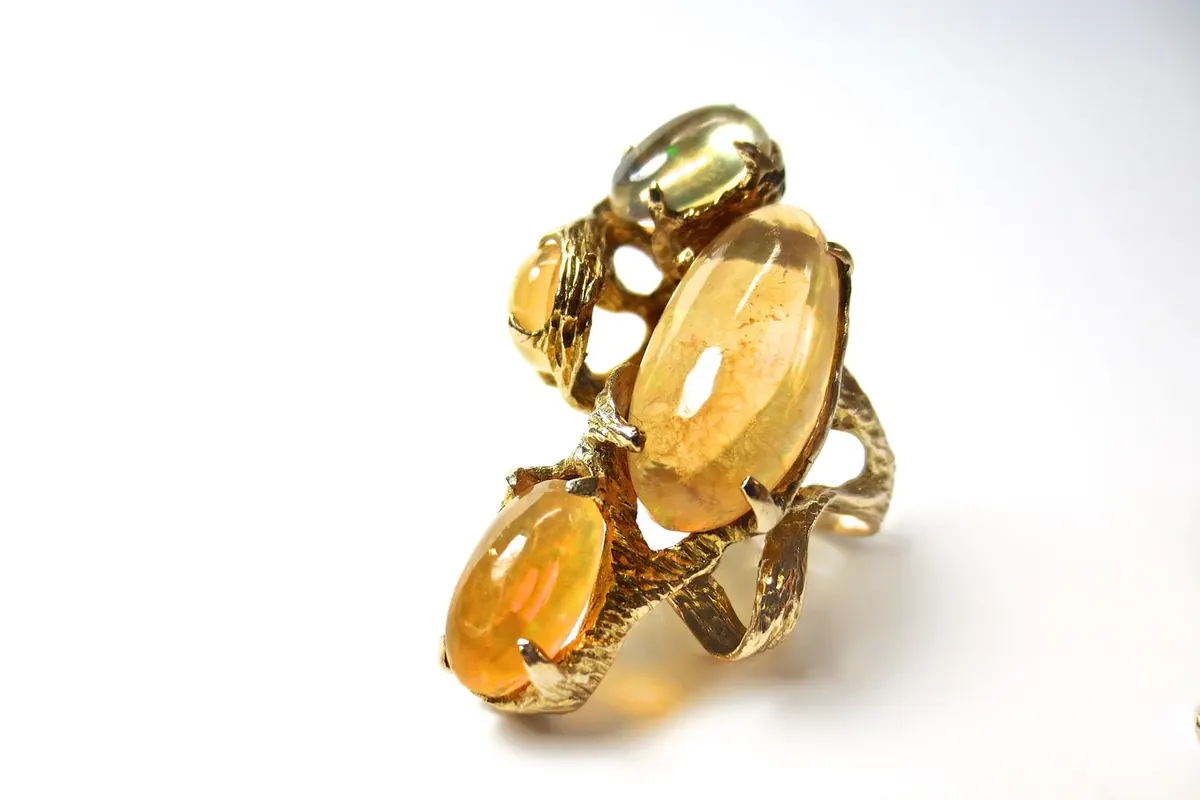
Look for body tones in honey, amber, cognac, peach, apricot and cherry. Ethiopian welo opals often deliver exactly this — semi-transparent stones with a soft, syrupy glow. Mexican fire opals are the boldest option, with an orange body that needs no help from the light. Boulder opals from Queensland bring something different again: a dark ironstone backing with bright flashes, which suits anyone who finds pastel opals too sweet.
You can also work with a white opal, provided the play-of-colour leans warm. Hold it against your hand in daylight, not under a shop light. If you see mostly reds and golds, it will sit happily next to wool, tweed and corduroy.
Choosing the metal
The setting does as much work as the stone. A warm opal in the wrong metal can look muddy or, worse, slightly synthetic.
Yellow gold
This is the obvious pairing, and in the UK it is also the most useful, because 9ct gold is already a little muted compared with 18ct. That gentler colour flatters peach and pale honey opals, while 18ct and 22ct give cherry and amber stones a richer frame. If you own gold jewellery already, stay in the same carat range so the ring sits comfortably with it.
Rose gold
Rose gold and warm opal are a natural match, but be careful with stones that are pink themselves — peach opal in rose gold can blur into one pink mass. It works best with deep reds, cherry, and stones with a strong orange flash, where the metal acts as a frame rather than a echo.
Silver, white gold and platinum
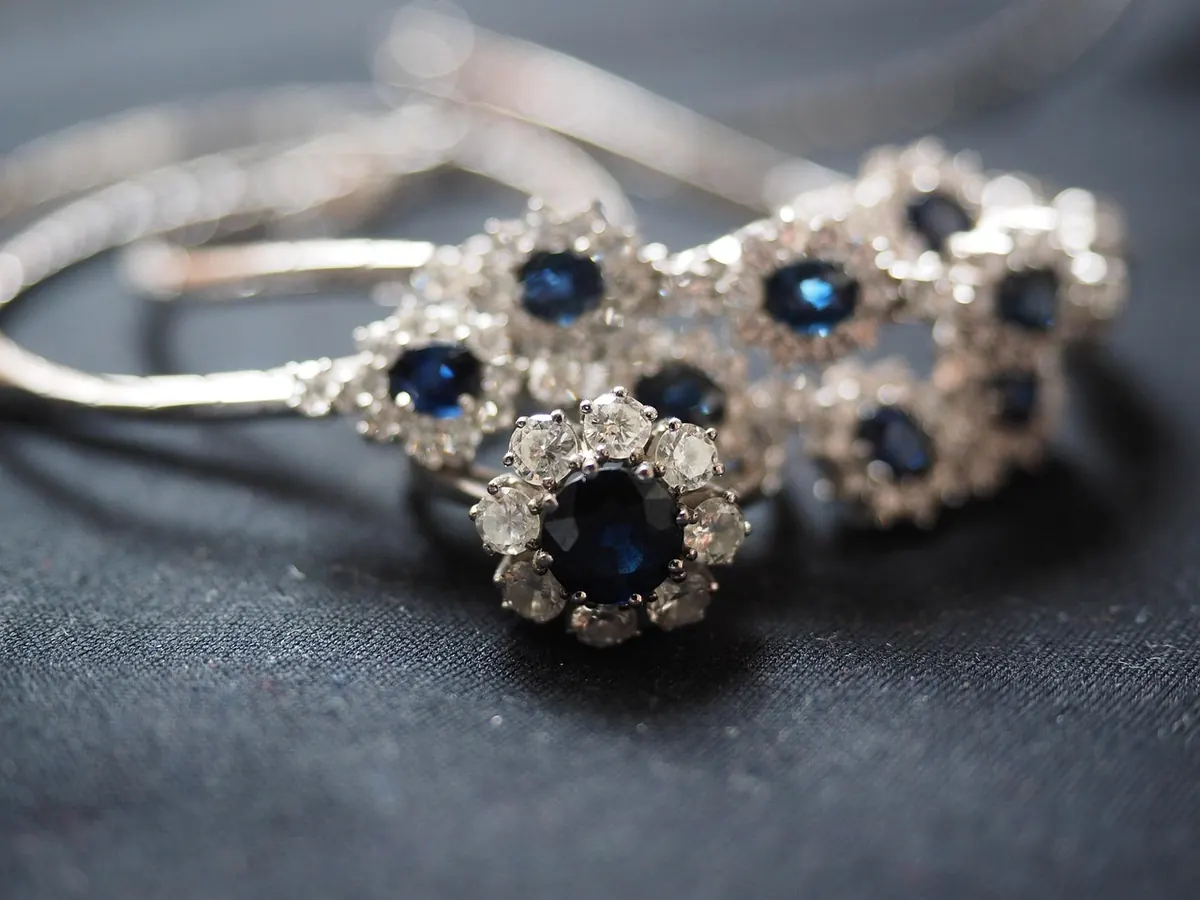
A cool metal makes a warm stone look deliberate. Mexican fire opal in sterling silver is one of the sharpest combinations in jewellery: orange against grey-white is a genuine contrast, not a clash. Boulder opal also suits silver and white gold, because the dark body needs a crisp edge. Palladium and platinum are worth considering for a piece you intend to wear daily.
Mixing metals
You do not have to match everything. Two useful rules: keep the mixed metals in the same finish (all polished, or all matte), and repeat one metal somewhere else on the body — a silver band on your right hand, silver hoops, a steel watch. One repeat is enough to make the mix look intentional.
Four outfit formulas that work
- Camel wool coat, cream knit, honey opal in yellow gold. The most reliable autumn combination there is. Keep the knit plain so the stone is the only pattern in view.
- Olive waxed jacket, denim, fire opal in silver. The cool green and blue make the orange work harder. Good for weekends and dog walks.
- Burgundy jumper, dark jeans, peach opal in rose gold. Softer and more romantic. Try it with a deeper berry nail colour rather than a red one.
- Charcoal tailoring, grey shirt, boulder opal in white gold. A low-key way to wear opal to work. The dark body keeps it understated.
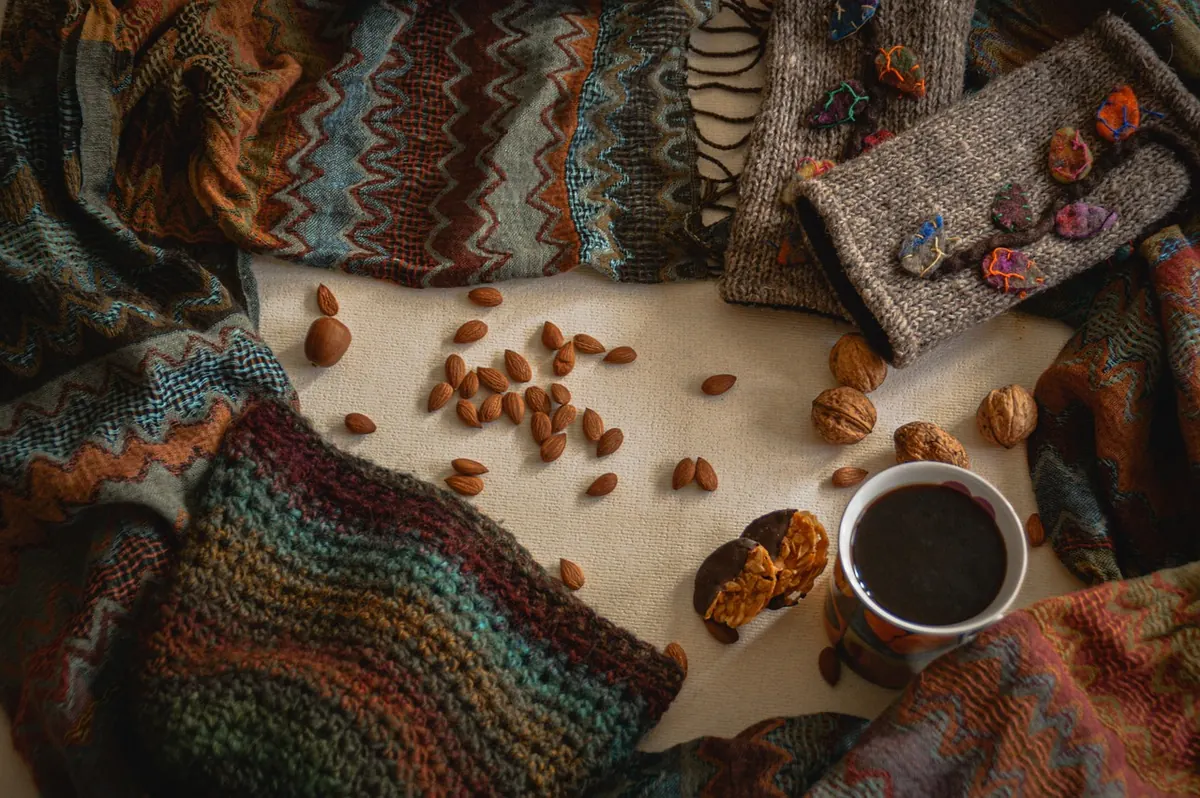
Tartan and tweed deserve a mention too. Both contain multiple warm threads, so pick the opal that echoes the least dominant colour in the cloth — the rust line in a check, or the gold fleck in a Donegal tweed. If the fabric is busy, the ring should be simple.
Rings, sleeves, rain and gloves
British autumn is a test of setting design as much as style. A tall cabochon catches on ribbed cuffs, scarf wool and the inside of a coat sleeve, and a snagged ring is a lost stone waiting to happen. If you wear knitwear constantly, choose a low-profile setting: a bezel, a flush-set stone, or a doublet or triplet, which is generally more robust for daily wear than a thin solid opal.
Practical points worth thinking about before you buy:
- Bezel over claw if you are hard on your hands. Fewer edges to catch means fewer repairs.
- Get sized in the afternoon, in a warm room. Fingers shrink in the cold, and a ring that fits in a heated shop may spin in a November wind.
- Think about gloves. Leather gloves worn over a ring are uncomfortable and stretch badly. A slightly looser glove, or moving the ring to a chain for the coldest weeks, solves it.
- Watch the sleeve length. A ring that sits just below a cuff is more visible and less likely to catch than one hidden half way up a sleeve.
Care through the damp months
Opal is hydrated silica, so ordinary British humidity is not the enemy — sudden dryness and knocks are. Avoid radiators, sunny windowsills and rapid temperature changes, and store the ring in a soft pouch rather than loose in a box with harder stones such as diamond or sapphire, which will scratch it over time.
Take it off for washing up, gardening, decorating and the gym. Soap, hand cream and hand sanitiser leave a film that dulls the polish, so put jewellery on after creams have soaked in. Clean with lukewarm water, a drop of mild washing-up liquid and a soft brush, then dry with a cloth. Skip ultrasonic and steam cleaners, and keep the ring away from household chemicals. For a valuable piece, ask your insurer about adding it to your contents policy as a specified item, and have a valuation on file.
Where to start this week
Pull out the knitwear you actually wear, not the knitwear you wish you wore, and look at the colours together. That pile is your brief. If it is camel, oatmeal and rust, you want honey or cognac in yellow gold. If it is charcoal, navy and olive, a fire opal or a dark boulder opal will do more for you than a pale stone.
Then wear the ring for a full day at home before committing to it for a wedding or a long journey — through a coat sleeve, in and out of pockets, with gloves on. An opal ring that survives an ordinary Tuesday in October will look after you all winter.
Photo: MarieXMartin / Pixabay