A British wedding asks a lot of your jewellery. A May ceremony in a Gloucestershire barn might be bathed in hard sunlight at four o'clock; a November service in a stone church is lit by candles and little else. An opal pendant copes with both, because it works with the light rather than fighting it. The trick is picking the metal, stone and chain length for the season you are actually dressing for.
Why Opals Work for UK Weddings
Opal does something diamonds cannot: it changes. The play of colour shifts from a soft sheen indoors to sharp flashes of green, blue and pink in daylight, so one pendant reads differently in the church, in the photographs and on the dance floor.
It is also forgiving to style. Opal comes in body tones from milky white through grey and crystal to near-black, so there is a version to suit most complexions and dress colours. One honest caveat: opal is softer than diamond or sapphire and holds water, so it needs a little care. More on that below.
Spring Weddings: Light, Fresh and Cool-Toned
April and May in the UK mean blossom, pale skies that may not last, and dresses in sage, blush, dove grey and soft floral prints. Your jewellery should feel as light as the fabric.
A white or crystal opal with green and blue flashes is the natural match, particularly an Ethiopian welo opal, which tends to have a bright, almost watery play of colour. Set it in sterling silver, white gold or platinum — cool metals stay quiet against pastels and do not glare in that slightly hazy spring light.
Keep the pendant small and the chain fine. An 8 x 6 mm oval or a slim teardrop on a 16–18 inch chain sits just below the collarbone, and a bezel setting is ideal for silk, chiffon and lace, because there are no claws to catch.
Summer Weddings: Bright Flashes and Warmer Metals
June to August brings long days, marquees, coastal venues and the strongest light of the year. This is the season when an opal earns its keep: in full sun, even a modest crystal opal throws colour across a room.
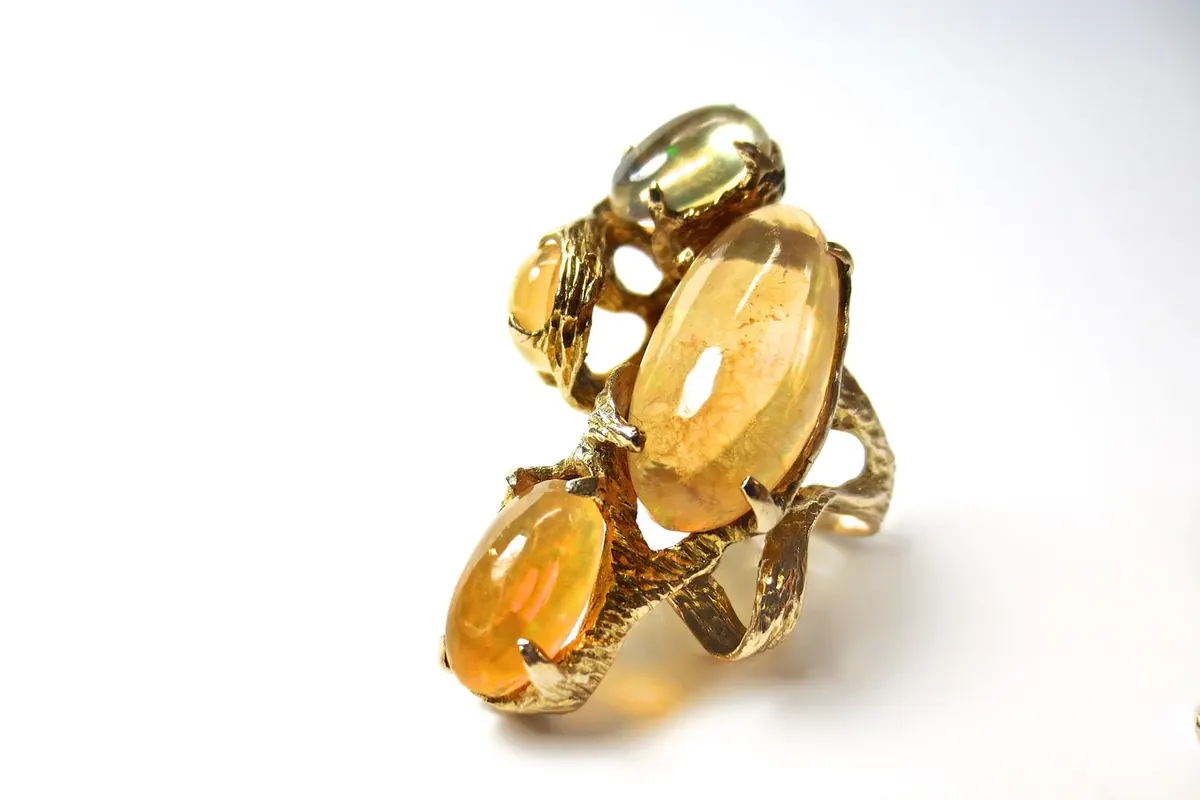
You can afford to go bigger and brighter here — a round or oval cabochon of about 10 x 8 mm, a halo of small stones, or a drop pendant that moves when you do. Yellow gold and rose gold work well, picking up warmth from the sun so a white dress does not look washed out. Sleeveless, strapless and halter dresses usually suit a shorter chain, often 16 inches, so the pendant rests in the open neckline rather than sliding underneath it.
Practicalities matter more in summer than at any other time:
- Apply sunscreen, perfume and hairspray first, then put your jewellery on. Alcohol and oils dull an opal's surface over time.
- Take the pendant off before swimming. Chlorine, salt water and sand are all unkind to opal.
- Avoid sunny windowsills and hot cars. Opal holds water, and fast drying or big temperature swings can cause fine cracks.
Autumn Weddings: Deep Tones and Yellow Gold
September, October and November weddings tend to happen in country houses, converted barns and hotels with log fires, and the palette turns to rust, plum, bronze and forest green. This is boulder opal territory. Cut with its ironstone backing, Australian boulder opal has an earthy quality that suits a rustic venue far better than a dainty white stone, and a black opal with green and red flashes is a strong alternative against a rich dress colour.
Set it in yellow gold or rose gold, or in oxidised silver if the styling is relaxed and textural. Autumn dresses often cover more of the neck, so move the chain down to 18 or 20 inches; a slightly larger pendant will hold its own against heavier, darker fabric.
Winter Weddings: Contrast, Candlelight and Layers
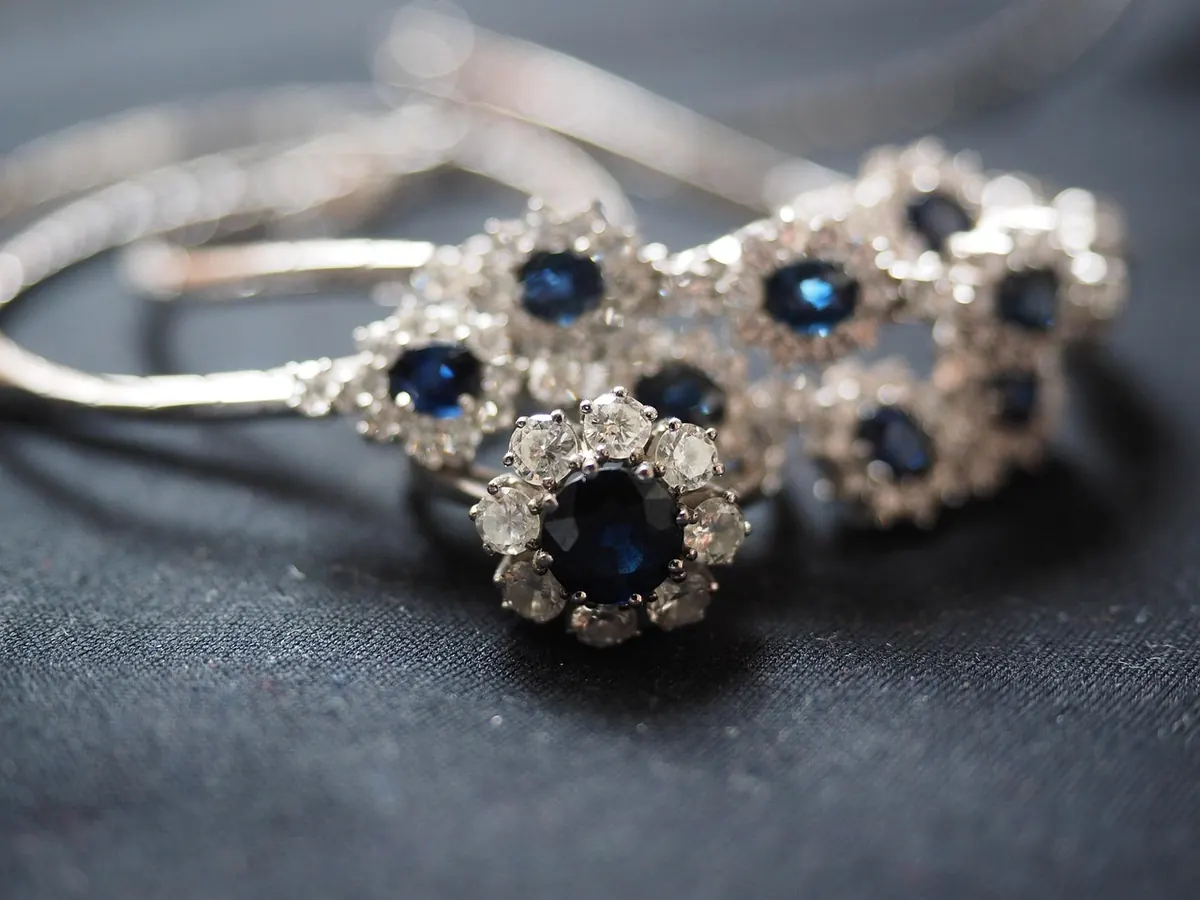
From December to February you are dressing for low light. Candles, fairy lights and camera flash change how a stone looks: pale white opal can disappear, while a dark-bodied opal with strong colour comes alive. This is the season for black opal, or for a crisp white opal worn deliberately against black, navy or deep green velvet. Rose gold and yellow gold warm up candlelight beautifully; platinum gives a sharper evening look for black tie.
Winter also means layers. A roll neck, a velvet dress with a high front, a bridal cape or a tartan wrap all push the pendant lower, so plan on a 20 or 22 inch chain, or a 24 inch drop for a high neckline. If you would rather not compete with a collar, wear opal earrings or a bracelet instead and save the pendant for the evening do.
Opal is October's birthstone and the traditional stone for a fourteenth wedding anniversary, which makes it an easy gift to justify if someone else is buying.
Matching the Pendant to the Dress
Necklines
- Sweetheart or strapless: a short drop or round pendant that fills the space without crowding it.
- V-neck: echo the shape with a teardrop, and check the point of the drop ends above the point of the V.
- High neck, halter or boat neck: go longer and smaller, or skip the necklace entirely.
- Illusion, lace or beaded bodices: choose a plain bezel setting — a busy halo will fight the fabric.
Metals and other jewellery
Two rules keep things simple. Match the metal to your wedding band if you are wearing one on the day, and limit yourself to two metal tones at most. If your band is yellow gold and your earrings are silver, an opal pendant in a two-tone setting bridges the difference neatly.
A Practical Checklist Before You Buy
- Try it against the fabric. Hold the pendant over your dress in daylight and indoors; opals can look entirely different against ivory, white and cream.
- Ask what you are buying. Solid natural opal is the most durable. Doublets and triplets use a thin slice of opal and should never be soaked.
- Check the setting. Bezels protect the stone and suit delicate fabric; claws let in more light but catch on lace.
- Measure the chain with the dress on, and have someone photograph you from the front and side.
- Check the balance. A large boulder opal on a very fine chain can tip forward and hang badly.
- Have the clasp and links inspected by a jeweller before the day, and arrange insurance or a valuation for anything valuable.