An opal catches light in a way most gemstones cannot. Turn your hand and the colour shifts from green to blue to a flash of orange, then vanishes. That moving play of colour is exactly why a first opal ring appeals — and also why shopping for one can feel confusing. Two rings can look almost identical in a photograph and behave completely differently on your finger.
Choosing a first opal ring comes down to a few decisions: what kind of stone you are buying, how it is set, which metal surrounds it, and how you intend to wear it. Work through those in order and the rest tends to fall into place.
Know which kind of opal you are buying
Opal jewellery is sold in three constructions, and the difference matters more than almost anything else on this page.
- Solid opal — a single piece of natural opal, cut and polished. This is what most people picture when they think of an opal ring, and it is the most durable of the three in normal wear.
- Doublet — a thin slice of opal glued onto a dark backing. The backing deepens the colour and keeps the cost down. It is a legitimate product, but it should always be sold as a doublet.
- Triplet — a slice of opal with a backing and a clear cap on top, usually quartz or glass, to protect the surface. Affordable and tough enough for everyday, but it is a composite rather than a natural solid stone.
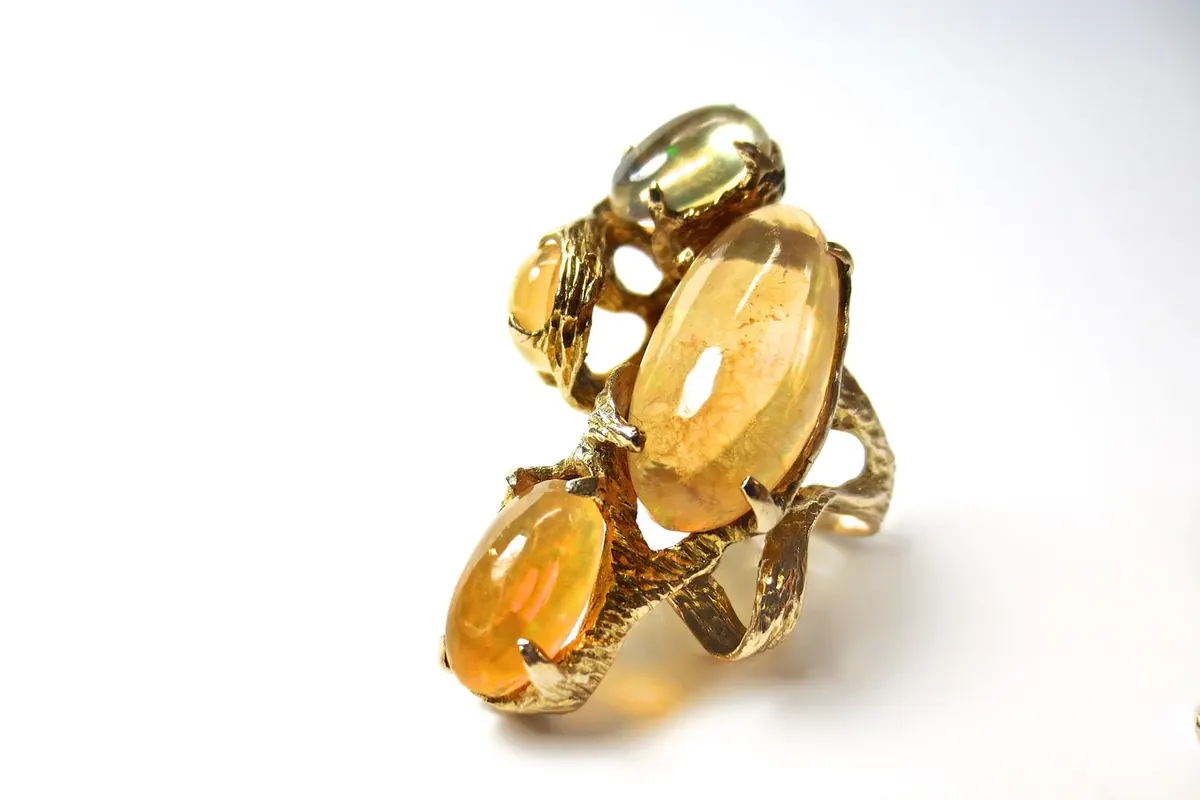
Alongside construction, you will meet a handful of opal types: white or light opal, crystal opal (translucent, often with beautiful depth), black opal (dark body tone with vivid flashes, the most prized and the most expensive), and boulder opal (natural opal running through ironstone, which gives striking, irregular patterns). Crystal and white opal are the usual starting points for a first ring; boulder opal suits anyone drawn to earthy, one-of-a-kind stones.
Ask the seller directly which one you are looking at, and get the answer in writing if you buy online. If a listing says "doublet" or "triplet", that is not a problem — just make sure the price reflects it.
Judging colour, brightness and pattern
In a ring, the stone is small — often 7mm across or less — so brightness matters more than the number of colours. A stone with one strong, even flash usually reads better on the hand than one with a busy pattern that only shows itself under a spotlight. Broad rolling flashes and harlequin patterns tend to hold their own in smaller sizes.
Look at any stone in several lights before committing. Opal can look flat under some indoor lighting and electric in others. If you are buying online, ask for a short video in natural daylight and another under a desk lamp, and be cautious of photographs where the stone looks wet or is lit strongly from behind. Both hide a dull stone.
Settings that protect the stone
Opal sits around 5.5 to 6.5 on the Mohs hardness scale. That is softer than quartz and far softer than diamond or sapphire, and it chips rather than bends. The setting you choose does more for the ring's lifespan than the stone's exact size.
- Rubover or bezel — a rim of metal wraps the edge of the stone. The best protection available, and the sensible choice for a ring you wear most days.
- Half-bezel — metal covers part of the edge, leaving more of the opal visible while still guarding the vulnerable girdle.
- Claw or prong — maximum light reaches the stone, but the edges sit exposed. Fine for occasional wear, riskier for a ring that meets door handles and shopping trolleys.
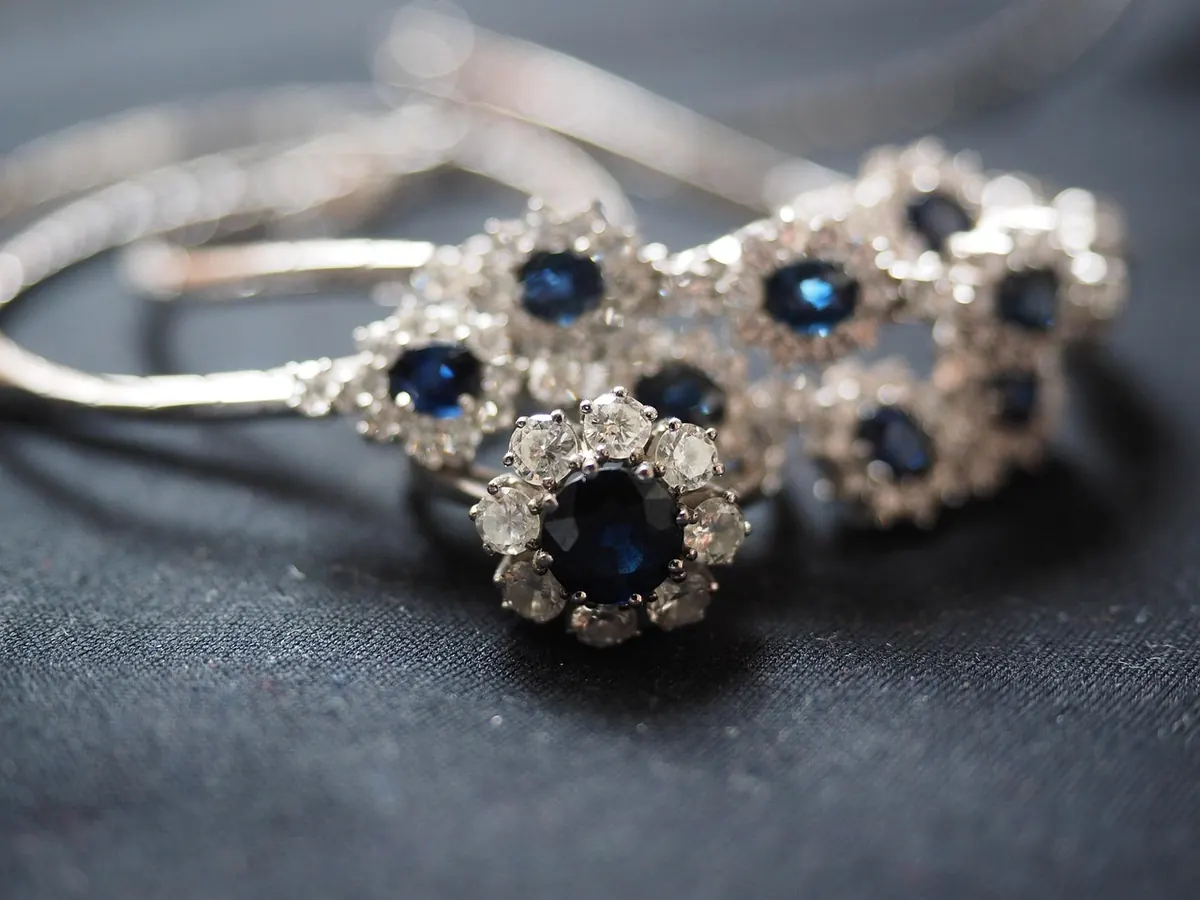
- Halo — a ring of small diamonds around the opal. It adds sparkle and presence, though a busy halo can compete with the opal's own colour.
- Flush or gypsy — the stone sits down into the band. Very protected and quietly modern, though it hides some of the opal's fire.
For a first ring worn regularly, a low-set bezel or half-bezel is hard to beat. Ask how high the stone sits; anything that stands proud of the band will catch on knitwear and knock against surfaces.
Choosing the metal
Metal colour changes how an opal reads. Yellow gold warms pale and white opals and suits boulder opal nicely. White gold and silver cool the stone down and can make blue and green flashes pop on a dark background. Rose gold flatters opals with pink or orange play, and looks especially good against crystal opal.
On durability, sterling silver is the most affordable and the softest, and it tarnishes over time. White gold wears well but usually needs replating every few years to keep its colour. Yellow gold, platinum and palladium are all hard-wearing; platinum is the densest and most scratch-resistant, and the most expensive. Hold a few options against your skin if you can — the right choice is often not the one you expected.
Style, shape and how it sits on the hand
Oval is the classic opal cut and flatters most fingers, while an elongated stone can make a short finger look longer. Round and cushion cuts feel more traditional; freeform shapes suit boulder opal and give you something nobody else owns. Band width matters too: a slim band is comfortable and stacks well, but a large stone needs enough metal underneath to stay stable and upright.
Think about where the ring will live. A solitaire in a protective setting works as an everyday piece. A trilogy ring, a vintage-inspired band with milgrain detail, or a stackable design suits someone who wants to build a collection slowly. If you can try rings on, do — a design that photographs beautifully can feel top-heavy once it is on your hand.
Sizing and the practical side of buying
Have your finger measured at the end of the day, when hands are warm and slightly larger, and bear in mind that fingers change with temperature and season. Wider bands need a slightly looser fit than narrow ones. If you are buying a ring you will wear daily and your weight or activity levels may change, ask about resizing before you commit: patterned bands and full-bezel settings are sometimes difficult or impossible to alter.
Buy from a seller with a clear returns policy, and check the details in the description rather than the photographs: stone type, dimensions, metal and karat, and whether the opal is solid, a doublet or a triplet. If the ring is valuable to you, it is worth asking your home insurer whether it is covered away from home or needs listing separately — a broker or insurer can advise on that properly. Finally, if the setting ever loosens or the stone takes a knock, take it to a jeweller rather than trying to fix it at home.
A short care routine for your first opal ring
Opal contains water and dislikes sudden changes, so a little care goes a long way.
- Put the ring on after perfume, lotion and hairspray have dried.
- Take it off before showers, washing up, swimming, cleaning and gardening.
- Clean it with a soft damp cloth and a little mild soap, then dry gently. Skip ultrasonic and steam cleaners.
- Store it in a soft pouch of its own, away from harder jewellery and away from very dry heat.
- Have the setting checked once a year, especially claws.
Buy the stone that makes you keep glancing down at your hand, then choose the setting and metal that let you wear it without worrying. That combination is what turns a first opal ring into the one you reach for every morning.
Photo: Alexey Demidov / Pexels